

Breast Augmentation With Lift After Kids: My Honest Experience and Recovery Tips
After two pregnancies, I chose to get a breast augmentation with a lift to feel like myself again and confident in my own skin. In this post, I’m sharing my honest experience, from choosing my surgeon to recovery and what actually helped me. If you’re curious or considering it yourself, buckle up. This one’s a long one.

If I’m being completely honest, I never breastfed. It wasn’t something I felt a strong desire to do, and pregnancy itself was rough on me both times. That doesn’t mean my boobs didn’t change, because they absolutely did. My milk still came in while I was trying to dry it up, I dealt with engorgement both times postpartum. My breasts grew a lot during both pregnancies, and once everything settled, I was left with very little fullness. It genuinely felt like my boobs shrunk two sizes and lost all structure. Even without breastfeeding, pregnancy alone did its thing.
When I went into my consultation, I asked my surgeon to give it to me straight. I knew my boobs needed help. He explained that because I had a lot of excess skin and had previously had much fuller breasts, implants alone wouldn’t give me the result I wanted. To get back a full, lifted look, I would need an anchor lift in addition to implants. Once he explained it, it made complete sense. The lift was just as important as the augmentation.

My husband and I always knew two kids was our number. Honestly, one probably would have been enough, but we wanted our son to have a sibling to grow up with. I grew up with three siblings and we’re still close to this day, so that mattered to me. After our daughter was born, we felt complete. Knowing we were done having kids made this decision feel easier and more final.
I did this for me, for my confidence. To feel like a woman again after everything my body had been through. Postpartum is hard enough, and some things don’t just magically bounce back. This wasn’t about anyone else. This was something I needed to do for myself, and I’m genuinely so happy I did.
Choosing A Surgeon
Choosing a surgeon felt like the biggest part of the process. I wanted someone who truly specialized in working with moms and understood how pregnancy and postpartum change your body, not just aesthetically but structurally. I also had a recommendation from a friend whose results spoke for themselves, so it made choosing Dr. Rady Rahban very easy. From the very first consultation, he was exactly what I was hoping for. Very direct, very honest, and not interested in sugarcoating anything. He told me what would work, what wouldn’t, and most importantly he explained why. Dr. Rahban has been in the field for a long time and it shows. He stays up to date on techniques and advancements and explains things in a way that actually makes sense.
I walked into my consultation with a size in mind and a million questions, but funny enough, he answered almost all of them before I even opened my mouth. My biggest concern was recovery. I have two kids at home, a toddler and a baby, and I needed to know what was realistic. He was very clear about that too. Recovery is not easy, and you will need help for a full six weeks. As much as that wasn’t what I wanted to hear, I appreciated the honesty and caution more than anything so I can get all my ducks in a row. I knew I would need to rely on my village more than ever.
When it came to choosing size, he explained that CCs don’t really mean much because they look different on every body. Instead, he had me look through his gallery and choose three examples that felt too small, three that felt too big, and three that felt just right. Very Goldilocks, but it worked. It made me feel confident in my decision and realistic about how I would look afterward. He also walked me through how the anchor lift would work and explained that recovery would be six weeks regardless.
Surgery Prep & Surgery Day
Before surgery, I was given a full protocol. No food or water twelve hours before surgery. Showering the night before and morning of with a special soap. No alcohol, smoking, vitamins, or herbal supplements two weeks leading up to surgery. I also started a stool softener a week beforehand because the medications afterward can cause constipation. Little things you don’t think about, but they matter.
The morning of surgery, I showered, braided my hair, and set up my recovery space. You can’t lie flat, so a wedge pillow is essential. My surgery was in Beverly Hills, so I stayed overnight in a hotel next door with my mom and sister. Enjoy your last shower because you can’t shower for a full week afterward, let me say I really savored that one.
The surgery itself took a few hours, mostly because the lift adds time. I have a higher pain tolerance than most, so I managed just fine with Tylenol and Valium to help me sleep. I never touched my prescribed pain medication. What did surprise me was how my body reacted to anesthesia. I was extremely nauseous for the rest of the day afterward, and my throat was sore for a couple of days from the breathing tube. Now I know how my body handles anesthesia since that was my first time going under. I was nervous but it just felt like a nap.
Week 1 & 2 Post-Op
One thing I wish people talked about more is drop and fluff. In the days right after surgery, I looked down into my surgical bra and had zero cleavage. I immediately panicked and thought they were too small. They were not too small, at all, but no one really prepares you for how long it takes everything to settle. Things sit high and tight at first, and it can mess with your head if you are not expecting it. You really do have to trust the process and give your body time to do its thing!
The first week of recovery is humbling. You quickly realize how much you rely on your chest muscles for everyday tasks, and needing help constantly can feel frustrating. I was surprised by how dependent I felt, not just physically but emotionally. I expected to be more uncomfortable than I actually was, but I completely underestimated how little I would be able to help with the kids. My toddler had to adjust to me saying no to being picked up, and my baby was fully my husband’s responsibility. That part was a lot harder than I anticipated.
There is also a lot of stillness in that first week. You are resting, healing, and just waiting. Sleeping is awkward and boredom sneaks in quickly. That time feels slow, but it is also necessary, so try to just enjoy the rest. My surgeon was very clear about not touching anything. Bra on, gauze on, no showering, and no peeking. At the one week mark, stitches were removed, which felt like a small milestone in itself. If you’re wondering it wasn’t super painful but it also wasn’t pleasant. This was my first experience with stitches so I really didn’t know what to expect. They take a razor blade and cut the stitches and use tweezers to pull them out.
Week two brought another hurdle, scab removal. I was honestly terrified going into it, but it was quick and pretty painless. The nurse said its done to support better healing and scars. Again, they use a razor blade to take off the scabs which terrified me to see but when I didn’t feel much. After that appointment, the plan was simple. Take it easy, keep healing, and come back in four weeks, with follow ups again at six months and then lastly, one year.
I cannot explain how excited I am to hear the words “you’re cleared” at my next appointment. At the same time, my nurse made it very clear that just because things feel better does not mean I am fully healed. We just had surgery, and taking it slow still matters. So I am doing my best to actually listen, even with two kids, which is easier said than done.
My Surgery Must-Haves
This list is a mix of everything my surgeon told me I would need, the things I researched and actually reached for during recovery, and a few last minute Amazon cart additions I was very glad I had. Some items were essentials, some were comfort based, and some were things I didn’t realize I would need until I was in it. If you are preparing for surgery, this is exactly what I used and what truly made recovery more manageable.

I knew my setup would be one of the most important parts of recovery because comfort is everything and I wouldn’t be doing much moving around. I was very right. For the first two weeks, the bed and the couch were basically my entire world. Not because I couldn’t move, but because I wanted to rest as much as possible. These pillows were truly the holy trinity.
The most important pillow by far was the wedge pillow. This one is completely non negotiable. After surgery, you cannot lie flat and you also need help sitting up, so the wedge kept me comfortably elevated and made getting in and out of bed much easier. This was the base layer of my setup and became the foundation of my entire recovery home base.
Next was my pregnancy pillow, which I already had. I didn’t even think about it at first, but when I was setting up my wedge, it was already on the bed, so I figured why not use it. For anyone wondering, I am two months postpartum and yes, I still sleep with my pregnancy pillow. I’m sure my husband hates it, but it is just so comfortable. I wrapped it around the wedge to support my legs and create a little cocoon around my body. It helped support my arms and kept me from rolling over. I didn’t have it during my hotel stay and I could immediately tell how much of a difference it made once I was home. If you have one lying around, use it. If you don’t, ask a mom friend to borrow one.
The last pillow was one I did not expect to need as much as I did, but it ended up being essential. The neck pillow. Everyone has one they bought at an airport on a whim, and unfortunately we have a small collection because we always forget to bring them and end up buying more. When you have to sleep upright, your head tends to bob around, and the neck pillow makes a huge difference. My husband brought me two to choose from and I ended up using both. One for my neck and one under my tailbone. Sleeping upright is surprisingly hard on your bum, and the neck pillow gave my tailbone the support and relief it desperately needed.
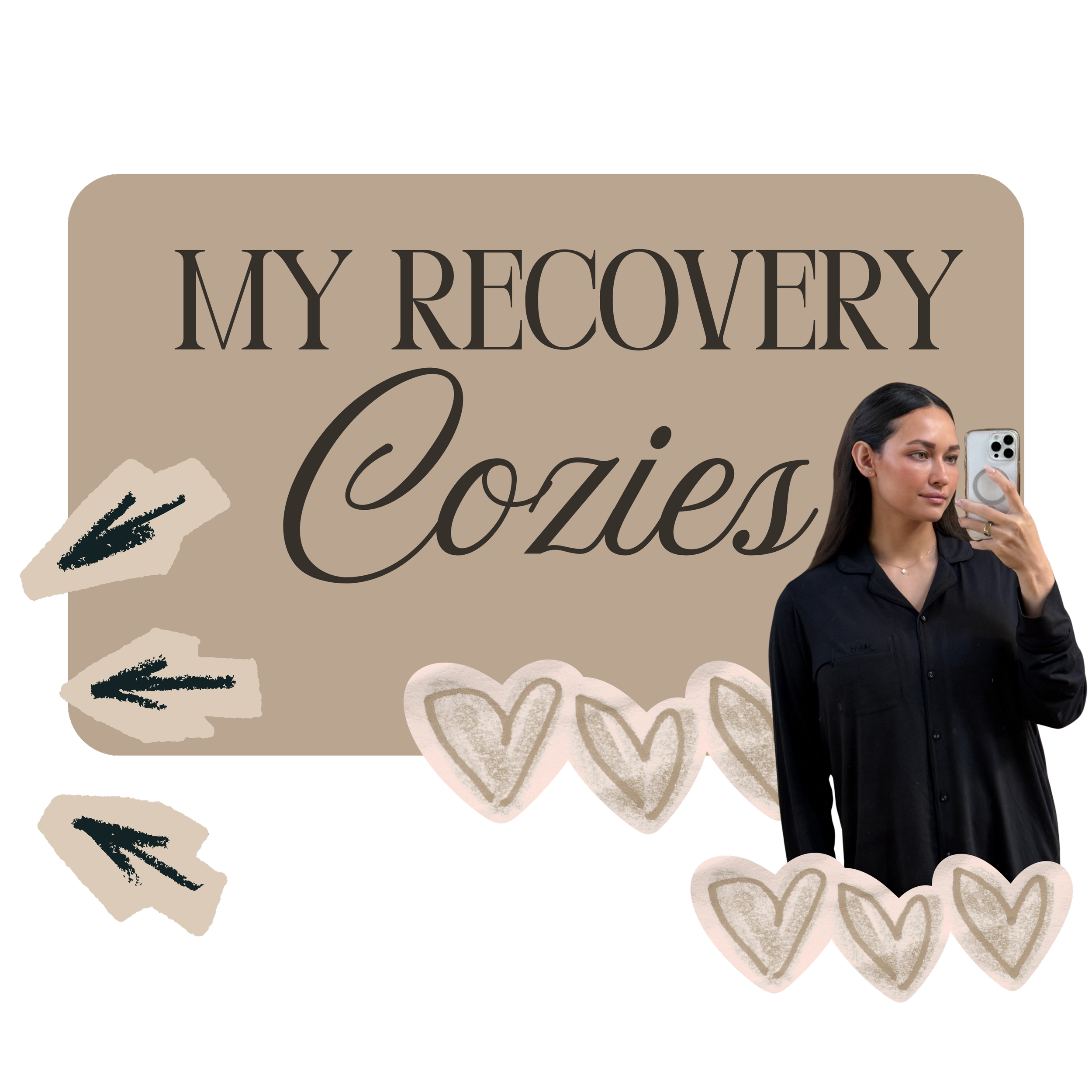
Comfort is everything during recovery. Lifting your arms hurts and getting dressed suddenly feels like a chore, so I lived in button up pajama sets. Somehow they made me feel more put together than the usual random t shirt and old pants, even while recovering. My doctor recommended a recovery bra with front hooks, which made getting dressed so much easier. You will live in these bras for six weeks, so grab a few to rotate.
My recovery cozies became my uniform immediately. Anything you have to pull over your head or wrestle your arms into is just not worth it. Button up pajamas were hands down the MVP. Being able to get dressed without lifting my arms too much made such a difference, especially during the first couple of weeks. I rotated through a few soft sets and lived in them day and night. Bonus points for the fact that they somehow made me feel more put together, even while very clearly in recovery mode.
Slippers were another non negotiable part of my recovery cozies. I needed something supportive and easy to slide on and off. Since I had my surgery in the winter, cold mornings made this even more important. Having a comfortable slipper made moving around the house feel safer and more stable when I was still sore and taking things slow. Luckily, I had my trusty Uggs that I've literally had since High School, they never fail me. My tried and true.
And then there’s the recovery bra, which truly deserves its own moment. This is not the time to improvise, spend the money and get some. My doctor recommended a front hook recovery bra, I didn’t listen at first and got a zipper one. They were SO much harder to do especially when I was alone. Being able to clasp it in the front without twisting or lifting my arms was a game changer. It was supportive without being uncomfortable, and since you’ll be wearing these for about six weeks, having a few to rotate through is key. Laundry becomes a whole thing during recovery, so backups matter.

These are the little things that did not feel important until I was actually in it. None of them are glamorous, but every single one made recovery smoother, more comfortable, and honestly more manageable day to day. These quickly became the items I reached for constantly.
First things first, I constantly felt dehydrated and dry, so having a water bottle within reach was essential. I kept my HydroJug filled and right next to me at all times. Hydration is everything during recovery, and the straw lid and leak proof design made it easy to keep on the bed day and night without worrying about spills. Because I felt so dehydrated, my lips were always chapped, so I kept a lip mask on my bedside table and reapplied it throughout the day. It quickly became a non negotiable.
One thing I did not expect to be such a problem was my hair. I have long hair and it was constantly in the way. I swear during recovery it tried to rage bait me. The first few days I wore braids, but they got annoying fast, and I quickly realized I needed my hair up and out of my way. My mom introduced me to flat claw clips around Christmas, and someone please tell me why I have never tried these before. They hold all your hair in place but are flat, so you can actually lay down without a giant piece of plastic digging into your head. Total game changer and something I reached for constantly.
Most likely, you will also be taking medication prescribed by your doctor, and if you know, you know. Things can really slow down. Another very unglamorous unsung hero is stool softener, because constipation is very real. I started it the week before surgery and highly recommend doing the same. Trust me, you will want things moving smoothly.
The first week also meant no showering. My surgeon did not want us removing the bandage or bra they put us in, which meant by day two I was already feeling very stinky. My husband introduced me to what he calls a “shower in a bag,” something they use at work on assignments. Turns out, it is also perfect for surgery recovery. It made me feel as clean as possible without actually being able to shower, which was a huge morale boost.
The last one was a personal decision, arnica tea. I already use it before getting filler or Botox because it helps with bruising and swelling, so adding it into my surgery recovery felt like an easy choice. I drank a cup before bed each night and feel like it helped things move along. It also became a small, calming part of my nighttime routine, which I really appreciated during recovery.
What I Would Tell Anyone Considering a Breast Augmentation With Lift
If you’re considering a breast augmentation with a lift and you think it will help you feel confident or like yourself again, I say go for it. Moms are allowed to feel good about their bodies. You do not need to justify that to anyone. That said, timing matters! If you plan on having more kids or are expecting to lose a significant amount of weight, I would personally wait. I had my surgery two months postpartum, but (surprisingly) I was already back to my pre-pregnancy weight, which made the decision feel right for me.
It is also important to talk about the mental side of recovery. Seeing your boobs right after surgery can be shocking. They look intense at first. High, tight, stitched up, very Frankenstein vibes. That part is temporary, but it can mess with your head if you are not prepared for it. Give it time. Every week, they soften, settle, and start to look more like what you envisioned.
Not being able to hold your kids is another emotional hurdle I was not fully prepared for. It is hard, especially as a mom. You will need help, and that is okay. Lean on your partner, your family, your village. This is not the time to push through or prove anything. Resting and healing properly is part of the process, and protecting your recovery is just as important as the surgery itself.
Choosing yourself after motherhood is allowed. You do not owe anyone an explanation. Confidence looks different for every mom.
